
Lead Service Line Inventory Initiative
About the Initiative
Jackson County Water District #1 is working to complete a lead service line inventory for our water system. This initiative is part of federal requirements that require public water systems to identify and document the materials used in both the utility-owned and customer-owned portions of water service lines.
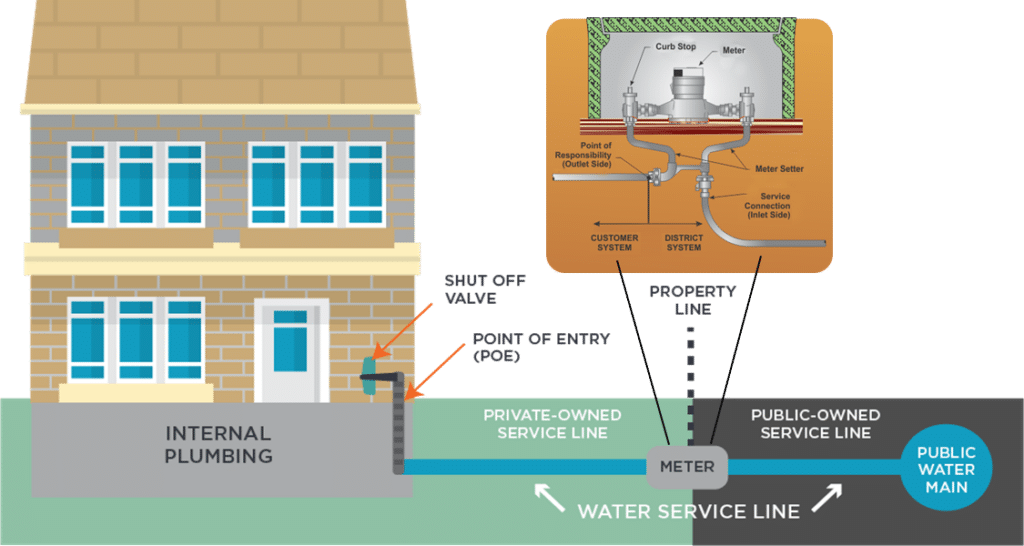
To complete this effort, we need help from property owners and residents. In many cases, the portion of the service line located on private property can only be identified by the homeowner, business owner, or property manager. By working together, we can build a more complete and accurate inventory for our community.
Residents will be asked to identify the pipe material where the water service line enters the home or building. After identifying the pipe, customers will also be asked to submit a photo of the service line entry point and provide the results through an online survey or other district-provided method. District #1’s page specifically requests a photo of where the line enters the home and directs customers to submit results through its survey.
This inventory is intended to help the District better understand where lead, galvanized, copper, or other service line materials may still exist. The privately owned portion of the service line is the responsibility of the property owner. Based upon the 2024 Lead Service Inventory, there are no public lead service lines in the District-owned water system. If lead service lines are identified on the private side, the information can help guide future communication, planning, and any next steps required under federal regulations.
If you are unsure how to identify your service line material, use the pipe identification instructions below or contact Jackson County Water District #1 for assistance.
Pipe Identification Procedures
How to Identify Your Water Service Line
Before starting, gather a few simple tools:
- Flathead screwdriver or coin
- Small magnet
- Phone or camera for a photo
Step 1: Locate the service line
Find the water line where it enters your home or building. This is often located in a basement, crawl space, utility room, or near the main shutoff valve. District #1’s instructions direct customers to inspect the pipe section between the wall entry point and the master shutoff valve.
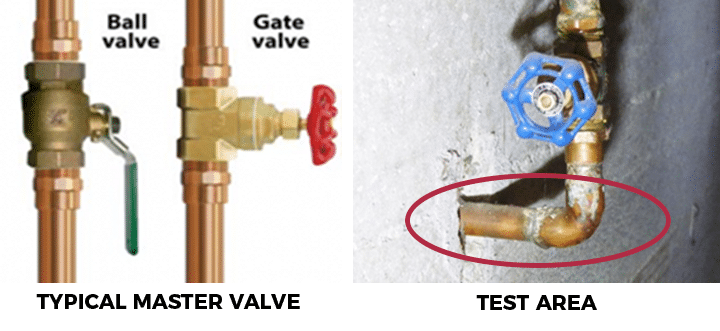
Step 2: Expose a small test area
Choose a visible section of pipe and wipe away dust, dirt, paint, or corrosion as much as possible so you can clearly see the surface.
Step 3: Perform a scratch test
Use a flathead screwdriver or similar tool to gently scratch the pipe surface.
Compare what you see:
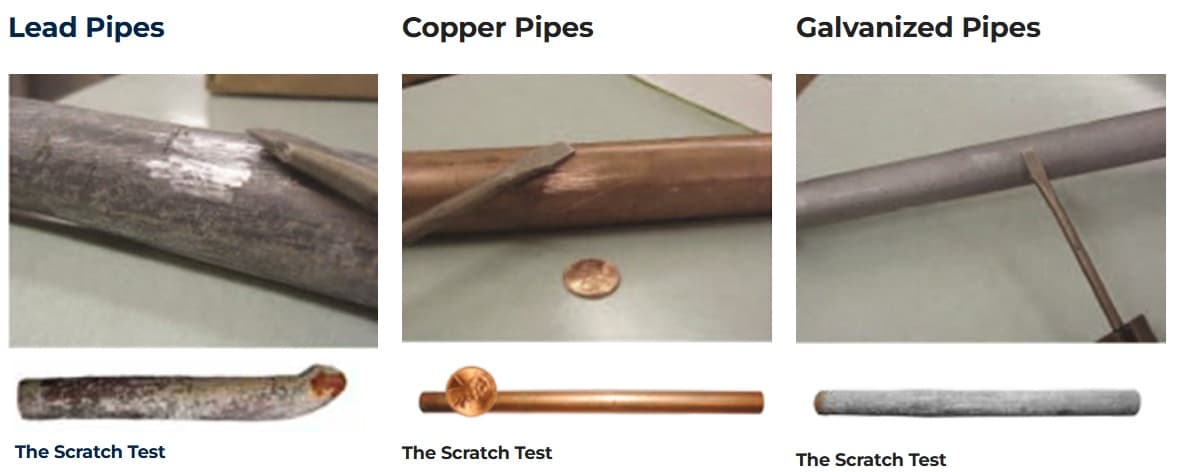
- Scratched area looks shiny silver
- Pipe is usually soft and scratches easily
- Magnet will not stick
- District #1’s page describes lead this same way.
Copper
- Scratched area looks like the color of a penny
- Magnet will not stick
- District #1’s page describes copper this same way.
Galvanized Steel
- Scratched area stays dull gray
- Magnet sticks
- District #1’s page describes galvanized pipe this same way.
Step 4: Take a photo
Take a clear photo of the pipe where you performed the identification. Make sure the image is well lit and shows the pipe material clearly. District #1’s page also asks customers to obtain a clear electronic picture of the service line test area.
Step 5: Submit your results
Once you have identified your pipe material, complete the District’s service line survey form and upload your photo if requested.
If you are unable to identify the pipe, or if you would like help, contact Jackson County Water District #1 and we can help guide you through the process.
Frequently Asked Questions
Why is Jackson County Water District #1 doing this?
Public water systems are required to develop and maintain an inventory of service line materials as part of current lead service line regulations. District #1 explains that its initiative was launched in response to EPA lead service line inventory requirements.
Why do you need my help?
The District may have records for some portions of the water system, but the customer-owned portion of the service line is often located on private property and must be visually identified at the building. District #1 similarly asks customers to help identify and categorize the customer side of the service line.
What is a service line?
A service line is the pipe that carries water from the public water main into your home or building. It can include both a utility-owned portion and a customer-owned portion.
What if I think my service line may be lead?
If your pipe appears to be lead, note that on the survey and contact the District if you have questions. District #1 recommends replacing any customer-owned lead service line as soon as possible and notes that the privately owned portion is generally the property owner’s responsibility.
Is the District responsible for replacing the private portion of the line?
In most cases, the privately owned portion of the service line is the property owner’s responsibility. District #1 states this directly in its FAQ.
Are there lead pipes in the District-owned system?
This depends on the system records and past replacement history. District #1 states it is confident previously existing lead pipes on the district-owned portion have already been replaced. For District #1, this answer should match whatever your client can confidently support.
What is lead?
Lead is a naturally occurring metal that can be harmful if inhaled or swallowed. District #1 uses this same basic description in its FAQ.
How does lead get into drinking water?
Lead is not usually found in the source water itself. More often, it can enter drinking water when water comes into contact with lead-containing plumbing materials and corrosion causes lead to leach into the water. District #1 explains this in similar terms on its FAQ page.
How can I know if my water has lead?
Identifying the material of your service line is an important first step. District #1 also notes that testing may be available through certified laboratories and references the Missouri Department of Natural Resources for testing resources.
What if I cannot identify my pipe?
If you are unsure, contact Jackson County Water District #1 for assistance. We can help you determine the material or explain what to look for.